We were in Saint Lucia for five weeks. While we made it our mission to visit all the beaches (and I mean all – check out our blog on the best beaches on the island), we also wanted to add a bit of culture into the mix. And what better way than through chocolate? We’d heard that the island’s rich volcanic soil makes it perfect for growing cacao, and as self-confessed chocoholics, we were sold. Plus, how cool would it be to make your own chocolate from scratch?
After a ton of research, we found Project Chocolat, a chocolate-making experience on the Rabot Estate, the oldest cacao farm in Saint Lucia. The name hooked us straight away – surely there had to be a link to the high street store back home, the one that produces those fancy boxes of truffles that everyone frantically buys at Christmas? Turns out, we weren’t wrong. Hotel Chocolat bought the Rabot Estate in 2006, and today it’s home to Project Chocolat – a hands-on, bean-to-bar chocolate-making experience in the heart of cacao country.

Project Chocolat in Saint Lucia: first impressions
Project Chocolat is located in the south of Saint Lucia, near Soufrière. We drove there ourselves and booked the tour online, which was super straightforward. That said, it’s also offered as part of other excursions – you can even roll it into a boat trip, since many companies on the island include a “land and sea” experience.
👉 If you’re curious, our Carnival Sailing trip had the option to add on the Bean to Bar experience for a full-day package.
As we drove in, everything was clearly signposted (so no panicked “Where are we?” moments – thank goodness), and parking was free. From the moment we met the security guard at the gate, we instantly felt welcome!
Family note: the experience isn’t designed for under-8s… because molten chocolate and kids don’t generally mix. But when we asked if we could bring our toddler along, they were amazingly accommodating. They set him up with a highchair at the end of the table so he could watch and feel like part of the action – minus the risk of tiny burnt fingers. A small gesture, but it meant a lot.
Booking a Project Chocolat tour & the options
There are two tours on offer:
- Tree to Bar (2.5 hours): includes history, a plantation walk, and chocolate-making.
- Bean to Bar (1 hour): shorter, hands-on chocolate-making session.
We knew without a doubt that Little Rick was not going to sit patiently through a two-and-a-half-hour tour (toddlers and their attention spans!). So we went for the Bean to Bar option – which, to be honest, was the one we were most excited about anyway. Making our own chocolate bar? Erm, hell yeah.
We arrived early to check in and found ourselves in a group of around 14 people. It was the perfect size: big enough for a lively atmosphere, but small enough to hear the guide, follow instructions, and get a bit of personal help when needed. The guide even had time to rescue the American family next to us, who were frantically scrubbing spilled cacao out of their 12-year-old’s white top. Rookie mistake.
Chocolate-making workshop at Rabot Estate
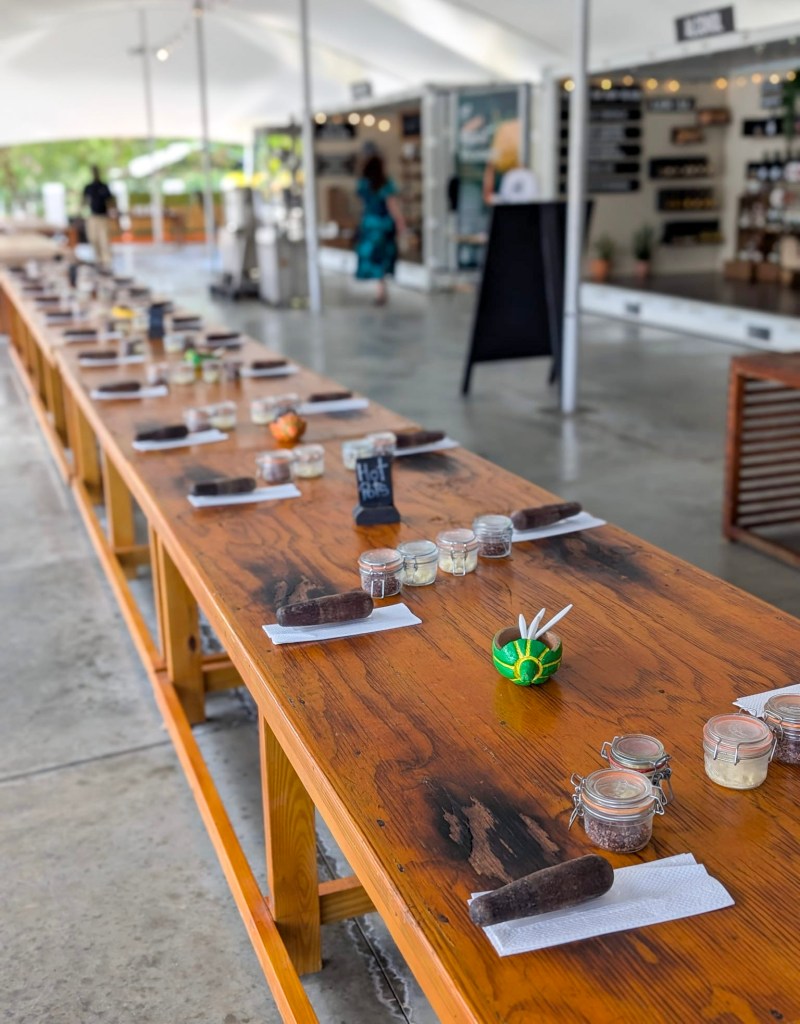
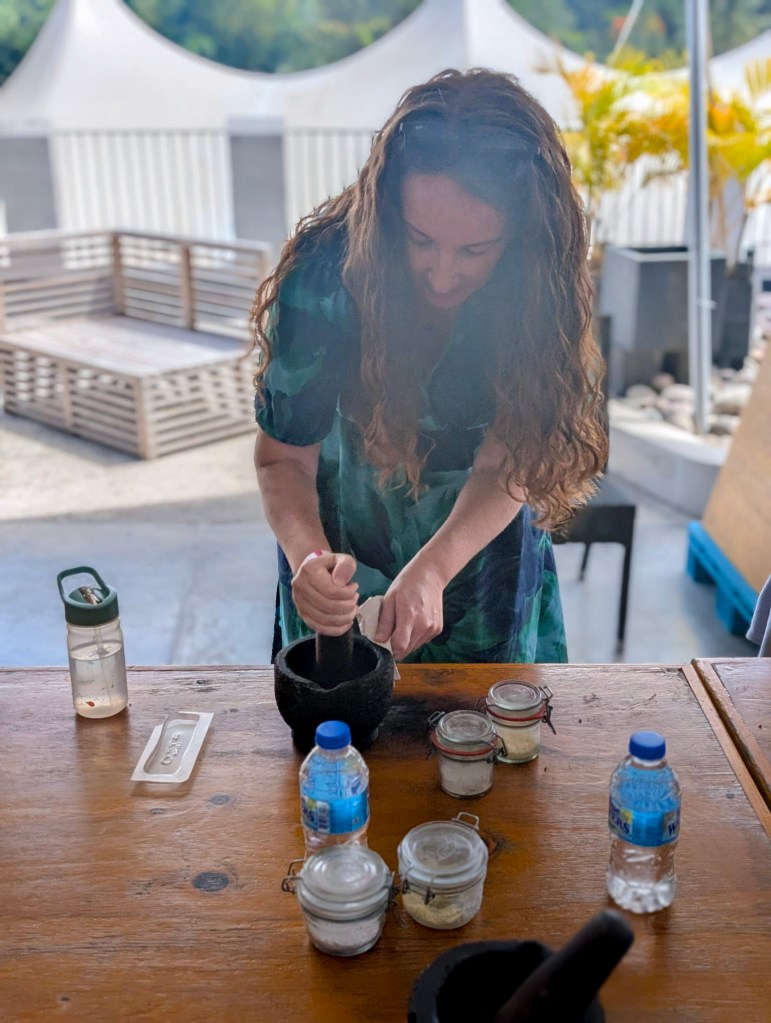
The workshop itself was brilliant. You take your place at a long communal workbench while the hosts talk you through the process. We each made a 72% chocolate bar (I think it was 72% – it was definitely on the dark side anyway). You can adjust the darkness by adding or reducing the amount of sugar, which was a revelation – I’d always assumed chocolate percentages were some secret formula.
And let me tell you: grinding cacao beans by hand is no joke. Within minutes, I was wishing I’d made my way to the gym for some arm workouts before flying to Saint Lucia. Thankfully, bottles of water were provided, because chocolate-making is surprisingly sweaty business. And that’s before you add in the Caribbean sun factor.
The most fascinating part for us was that even though Mr Rick and I added the same amount of sugar, our bars tasted completely different. It all came down to the pestle and mortar: how long you grind, how fine you go, the effort you put in. Same ingredients with wildly different results. So what I’m taking from this is that chocolate is basically science, so we should all participate in chocolate-tasting as much as possible. It’s for the good of all of us!
Exploring the Rabot Estate
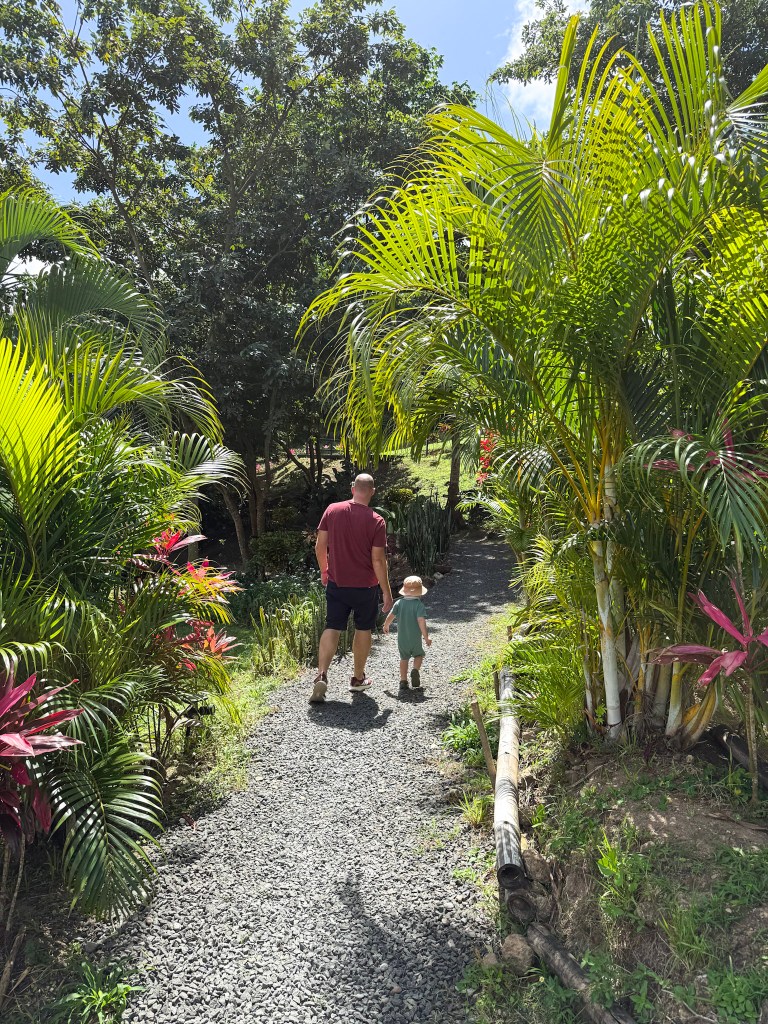
While our bars cooled and hardened, we explored the estate. The gardens are lush, tropical, and beautiful, but the highlight for us was the food tent – a street-food-style setup that felt like a mini festival.
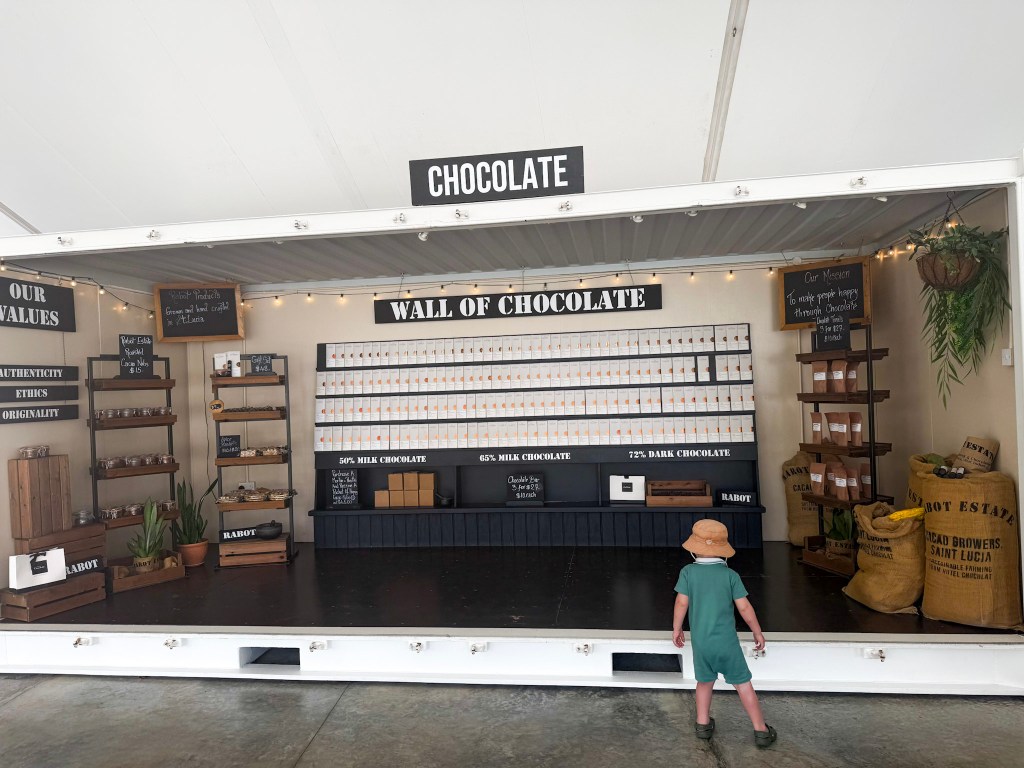
There was a crêperie, a salad bar, ice cream, and hearty Caribbean dishes. Because this is Project Chocolat, cacao sneaks into the menu in unexpected ways (we had white chocolate mashed potato… which was confusingly delicious). Beyond food, there were stalls selling chocolate, cacao-infused spirits, hot drinks, and even beauty products. If it can be made with cacao, you’ll likely find it here.
If you go: Project Chocolat, Saint Lucia
- Location: Rabot Estate, Soufrière, in the south of Saint Lucia.
- Booking: Online only. You must pre-book – you can’t just turn up. We booked the day before, so no need for months of planning.
- Tour options:
- Tree to Bar (2.5 hours): includes history, plantation tour, and chocolate-making.
- Bean to Bar (1 hour): shorter, hands-on chocolate-making experience (great with kids or short attention spans… or both).
- Family info: Officially for ages 8+, but they allowed us to bring our toddler, who sat happily in a highchair watching. Participation for little ones isn’t possible due to hot chocolate handling.
- Getting there: Drive yourself, or join a tour. Many “land and sea” excursions include Project Chocolat as part of the day.
- Good to know: Grinding cacao by hand is surprisingly hard work – it’s basically an arm day at the gym. Bottled water is provided, but wear something cool and comfy. And maybe don’t wear white!
- Food & extras: While your chocolate sets, explore the gardens and the street-food-style tent with crêpes, salads, Caribbean dishes, ice cream, and quirky cacao-inspired options. Plus, stalls selling chocolate, cacao-infused spirits, hot drinks, and beauty products.
- Parking: Free, and well signposted.
In a nutshell: our Project Chocolat chocolate-making adventure
Project Chocolat is more than a tour – it’s a full-on chocolate-making adventure. From bean to bar, set in lush tropical surroundings, it’s perfect for chocolate lovers or anyone seeking a unique Saint Lucia experience. This is definitely one sweet memory we’ll never forget.
Does making your own chocolate sound like your kind of adventure? We’d love to hear your thoughts! Drop a comment below and tell us – would you give Project Chocolat a try on your next Saint Lucia trip?



Leave a comment